
Make sense of the data across your systems.
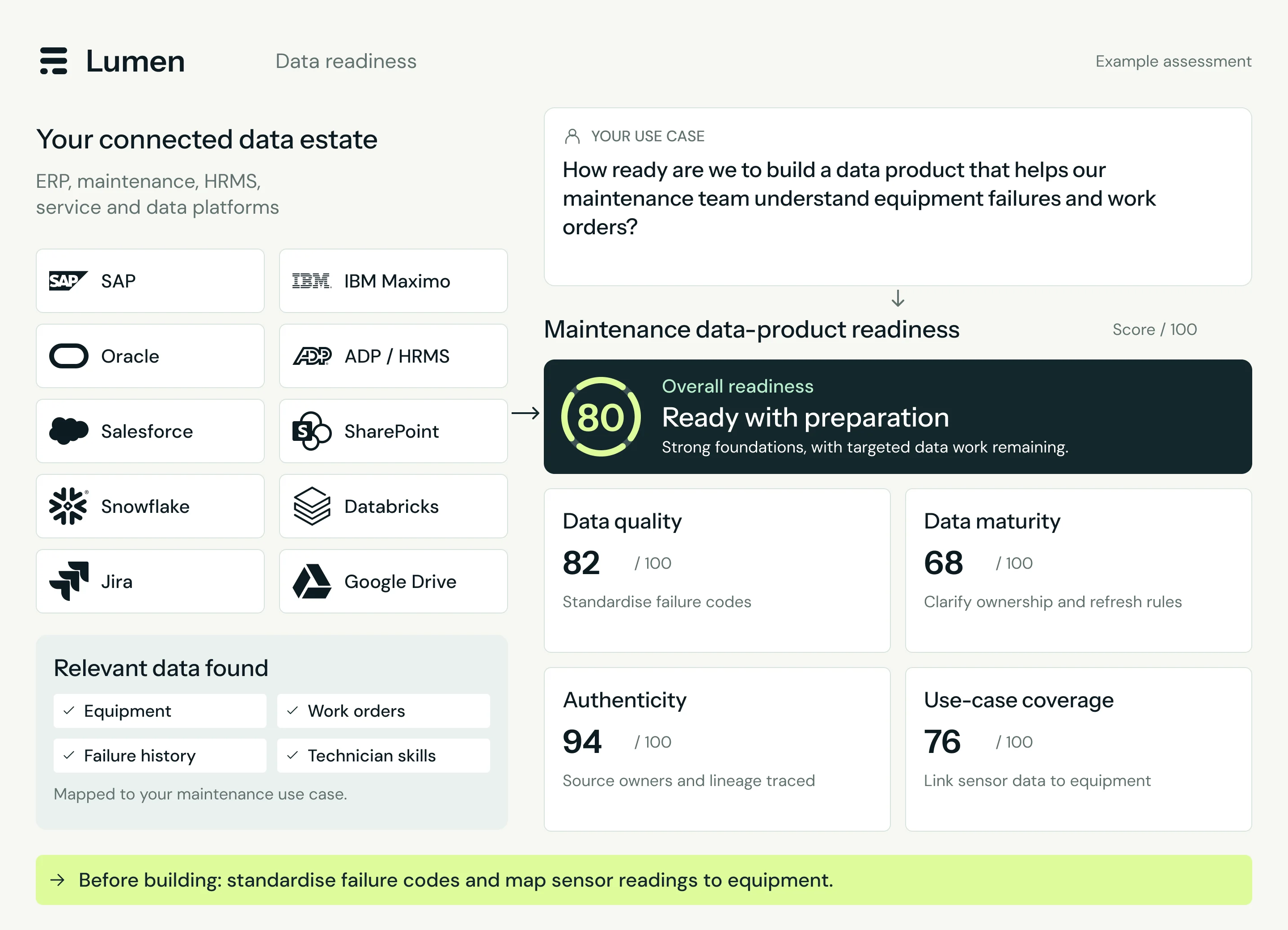
Each system describes the business its own way, so teams are unsure what the data means or whether AI can use it. Lumen maps every system into one view of its meaning, tells you if your use case is doable and defines the data product: which data to connect, and from where.
One view of your data, a feasibility check for your use case and the data product to build.
- One map of your data and its meaning
- Feasibility for your use case
- The data product to connect
From a business intent to a working assessment.
Select the information in scope, explain the intended use and inspect what needs preparation.
Define the scope
Choose the relevant source systems and the work you want the data to support.
Assess the fit
Examine source relationships, meaning, coverage and the evidence behind each finding.
Plan the preparation
Review the remaining gaps and next actions before moving toward implementation.
Understand the information before you build.
Source discovery
Find the authorized sources and structures relevant to the task.
Business meaning
Make dataset, field and value definitions explicit.
Relationships and evidence
Inspect proposed business relationships alongside their supporting context.
Fitness for use
Compare definitions, grain, history and access against the requirement.
Preparation brief
Record selected inputs, unresolved gaps and the next validation work.
A data decision the build team can use.
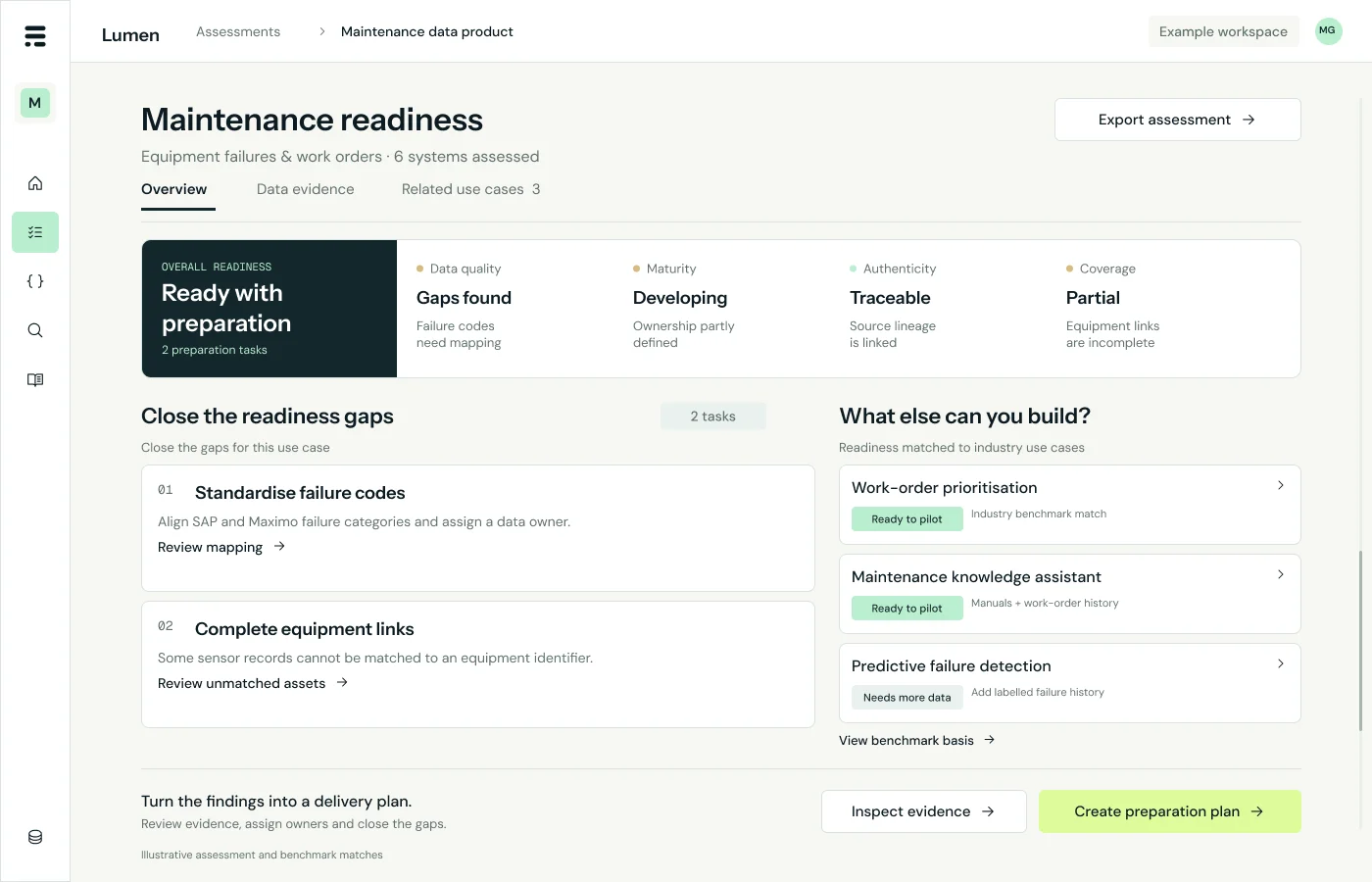
Review readiness, preparation tasks and related use cases before planning delivery.
- Intended use
- Systems assessed
- Readiness findings
- Preparation tasks
- Related use cases
- Evidence and next action
Which requirement is supported, and which still needs preparation?
Relevant is not always suitable.
One row per invoice dispute, with amount, status and closure history.
An invoice-line table and a current case snapshot answer different questions.
Current status alone does not establish historical reopening rates.
Choose the environment for your requirements.
Choose public or private cloud, on-premises or an air-gapped environment. Define product configuration, model connections and data access around your requirements.
- Public or private cloud
- On-premises
- Air-gapped
From product demo to implementation.
Agree source access, the discovery boundary, metadata and content handling, review ownership and refresh needs.
- Task and sources
- Deployment and configuration
- Agreed product support
Your proposal sets out the software, engineering, deployment responsibilities and support included.